
Local Laws and Culture: Legal Status of Sex Work, Prostitution, and Cultural Sensitivities in South Africa
May 14, 2026
Safety and Budget: Essential Travel Tips and Costs for South Africa
May 16, 2026South Africa Cuisine: Must-Try Traditional Foods and Dining Experiences
{"AIGC": {"Label": "1", "ContentProducer": "zhipu-maas", "ProduceID": "g2q5t7lc4cienhzsfysuh9", "ReservedCode1": "886592f9", "ContentPropagator": "zhipu-maas", "PropagateID": "g2q5t7lc4cienhzsfysuh9", "ReservedCode2": "886592f9"}}
One of the best ways to understand the Rainbow Nation is through its stomach. South African cuisine is a vibrant melting pot, heavily influenced by its indigenous roots, Dutch colonial history, the spice trails of Malay slaves, and the Indian laborers who arrived in the 19th century.
The result is a culinary landscape that is hearty, spicy, and incredibly diverse. Whether you are eating with your hands in a township or dining at a world-class vineyard, here are the must-try traditional foods and dining experiences in South Africa.
The Braai: More Than Just a Barbecue
If there is one thing that unites South Africans across all cultures, it is the Braai (short for Braaivleis, which is Afrikaans for “roasted meat”). A braai is not just a method of cooking; it is a deeply ingrained social event.
Unlike a Western BBQ which uses gas, a true braai is cooked over wood or charcoal, imparting a distinct smoky flavor.
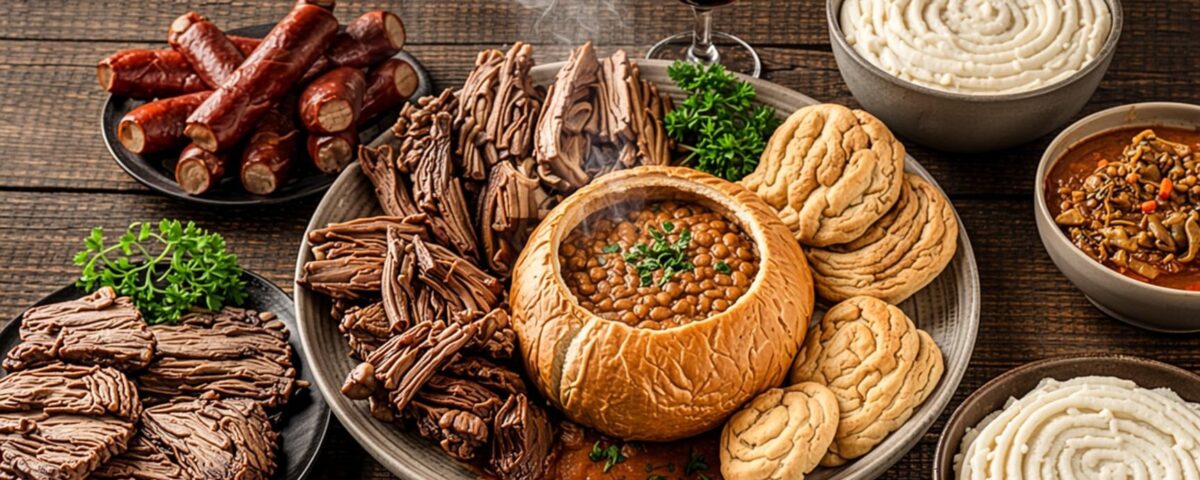
- What to eat: You will find thick cuts of steak, lamb chops, and the beloved Boerewors (a traditional farmer’s sausage made of beef, pork, and spices, usually coiled up on the grill).
- The Experience: If you are invited to a braai by locals, consider it a high honor. It is an afternoon-long affair involving cold drinks, great conversation, and incredible meat.
Biltong: The Ultimate Savory Snack
You cannot walk through a South African airport or shopping mall without seeing biltong. This is a form of dried, cured meat that originated as a way for the Dutch settlers (Voortrekkers) to preserve meat on long journeys.
While it looks similar to beef jerky, the taste is entirely different. It is typically marinated in vinegar and spices like coriander, black pepper, and salt before being air-dried. Beef is the most common, but you can also find game meats like kudu, ostrich, or springbok biltong.
Cape Malay Cuisine: The Spice of the Cape
Brought to the Cape by slaves from Southeast Asia in the 17th century, Cape Malay cuisine is a cornerstone of Cape Town’s food identity. It is characterized by the fragrant use of spices like cinnamon, cardamom, and turmeric, often combining sweet and savory flavors.
- Bobotie: Considered by many as the national dish of South Africa. It is a spiced, baked minced meat dish topped with an egg-based custard and often served with yellow rice and raisins.
- Koeksisters: A wickedly sweet, sticky pastry made of fried dough plaited and then soaked in a cold, spiced sugar syrup.
Bunny Chow: Durban’s Culinary Gift
If you find yourself in Durban or Johannesburg, you must try a Bunny Chow. Despite the name, it has nothing to do with rabbits! It was created by the Indian community in Durban as a convenient way to carry meals during the apartheid era when certain groups were not allowed to eat inside restaurants.
A Bunny Chow is essentially a hollowed-out loaf of white bread filled to the brim with spicy curry (chicken, mutton, or beans). It is served with the scooped-out bread center (the “virgin”) on top, which you use to mop up the gravy. You eat it with your hands, and it is spectacular.
Traditional Township Flavors: Pap and Chakalaka
To experience the everyday food of Black South Africans, you need to try a meal centered around Pap.
Pap is a traditional porridge made from maize meal, very similar to polenta. It has a dense, dough-like consistency and is usually served as a base for meat and vegetable stews. It is almost always accompanied by Chakalaka—a spicy, chunky relish made from onions, tomatoes, carrots, and chilies, often with a kick of ginger.
You can experience this authentically by visiting a Shisa Nyama (meaning “burn the meat” in Zulu). These are informal, outdoor barbecue areas in townships where you buy your meat from the butchery, have it grilled over open flames, and eat it with pap, chakalaka, and cold beer.
Fine Dining and World-Class Wines
South Africa isn’t just about street food and hearty stews; it is also home to some of the finest dining on the continent.
The Franschhoek and Stellenbosch wine regions, just outside Cape Town, are world-renowned for their Chenin Blancs and Pinotages. Many of the wine estates feature award-winning restaurants where French-inspired techniques meet local ingredients. Cape Town itself boasts several restaurants that regularly make the “World’s 50 Best Restaurants” list, offering multi-course tasting menus that are an art form in themselves.
From the smoky flavor of a township shisa nyama to the refined elegance of a Franschhoek estate, South Africa offers a culinary journey as diverse and captivating as its landscapes.