Top 10 African Countries Every Travel Enthusiast Must Visit
May 14, 2026
Navigating South Africa: Major Airports and Arrival Guide
May 14, 2026South Africa Travel Guide: Overview, Languages, and Religions
{"AIGC": {"Label": "1", "ContentProducer": "zhipu-maas", "ProduceID": "2vxs5a8d4pgaebrkczjbkq", "ReservedCode1": "f51d7f09", "ContentPropagator": "zhipu-maas", "PropagateID": "2vxs5a8d4pgaebrkczjbkq", "ReservedCode2": "f51d7f09"}}
Welcome to the southern tip of the African continent—a land that is as diverse as it is breathtaking. South Africa is not just a destination; it is an experience that leaves a permanent mark on the soul of every traveler.
Often referred to as the “Rainbow Nation,” a term coined by Archbishop Desmond Tutu to describe the country’s multicultural diversity, South Africa offers a unique blend of first-world infrastructure and raw African wilderness. Whether you are exploring the vibrant city life, driving along stunning coastal routes, or tracking the Big Five in a private game reserve, this country promises an unforgettable journey.
An Overview of South Africa
South Africa is a large country covering approximately 1.2 million square kilometers, making it roughly the size of France and Spain combined. It shares borders with Namibia, Botswana, Zimbabwe, Mozambique, and Eswatini, while completely enclosing the tiny kingdom of Lesotho.
What makes South Africa incredibly unique is its varied landscape and climate. You have the arid semi-desert of the Karoo, the lush, subtropical coastline of KwaZulu-Natal, the dramatic peaks of the Drakensberg mountains, and the world-renowned fynbos vegetation of the Western Cape.
Unlike many other African nations, South Africa has three capital cities, each serving a different branch of government:
- Pretoria: The executive capital (where the government administration is based).
- Cape Town: The legislative capital (where the parliament sits).
- Bloemfontein: The judicial capital (home to the Supreme Court of Appeal).
However, the economic heartbeat of the country is Johannesburg, a sprawling, energetic metropolis that serves as the primary gateway for international travelers.
The Linguistic Mosaic: 11 Official Languages
One of the most fascinating aspects of South Africa is its linguistic diversity. The country recognizes 11 official languages, reflecting the complex history and varied ethnic groups of the region.
While this might sound overwhelming to a visitor, you will find that communication is rarely an issue. English is the language of business, politics, and the media. Almost all road signs, menus, and tourism information are in English, and the vast majority of South Africans in urban areas speak it fluently.
However, to truly appreciate the local culture, it helps to know which languages dominate where:
- Zulu (isiZulu): The most widely spoken home language, predominantly in KwaZulu-Natal.
- Xhosa (isiXhosa): The second most common, widely spoken in the Eastern and Western Cape.
- Afrikaans: A language that evolved from Dutch, spoken widely in the Western and Northern Cape.
- English: The primary language of the major cities and the tourism sector.
- Sotho (Sesotho), Tswana (Setswana), and Tsonga (Xitsonga): Prominent in the interior and northern regions.
A quick tip for travelers: Learning a simple greeting like “Sawubona” (Hello in Zulu) or “Howzit” (A casual, uniquely South African English greeting) will instantly win you smiles from the locals.
The Religious Landscape
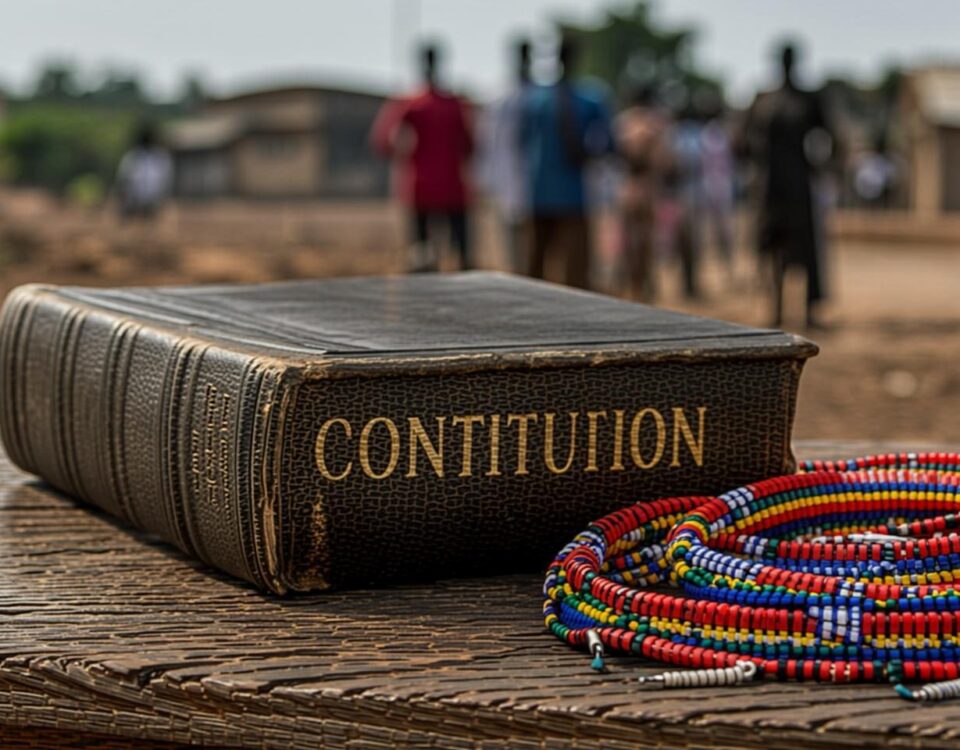
Just as its languages are diverse, South Africa’s religious landscape is a vibrant tapestry. The country’s constitution guarantees freedom of religion, resulting in a society where multiple faiths coexist peacefully.
Christianity: The dominant religion in South Africa, practiced by nearly 80% of the population. This includes traditional Protestant denominations, the Roman Catholic Church, and a massive number of African Independent Churches (AICs). The Zion Christian Church (ZCC) is one of the largest and most visible of these independent churches, known for its distinctive uniforms and massive Easter pilgrimages.
Traditional African Religions: Many South Africans, particularly in rural areas, practice traditional African religions alongside Christianity. These belief systems are deeply rooted in ancestral veneration, where the spirits of the ancestors play a crucial role in daily life, health, and fortune. Traditional healers, known as Sangomas, are highly respected figures who act as intermediaries between the living and the spiritual world.
Other Major Religions:
- Islam: Brought to the country by political exiles and slaves from Southeast Asia during the colonial era. The Muslim community is prominent in Cape Town, where you will find beautiful historic mosques and vibrant bo-Kaap neighborhood.
- Hinduism: Practiced primarily by the descendants of indentured laborers brought from India to work in the sugarcane fields of KwaZulu-Natal in the 19th century.
- Judaism: South Africa has a well-established and historically significant Jewish community, primarily in Johannesburg and Cape Town.
Secularism: A growing percentage of South Africans identify as non-religious or secular, reflecting a global trend toward more individualized spiritual beliefs.
Understanding the languages and spiritual fabric of South Africa is the first step to truly appreciating its people. It is a country that thrives on diversity, resilience, and a deep connection to its land and ancestors.