

Getting Around: Domestic Transport and Travel Options in Kenya
May 17, 2026
Natural Wonders: Best Safaris, Beaches, and Landscapes in Kenya
May 17, 2026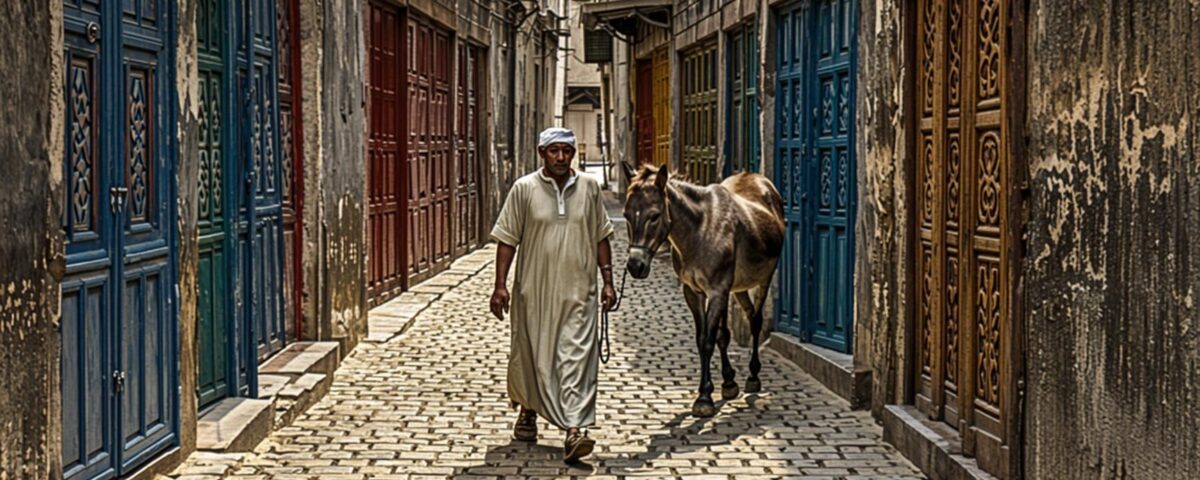
While Kenya is globally renowned for its spectacular wildlife and the Great Migration, the country is equally rich in human history and cultural diversity. In fact, the Great Rift Valley is often called the “Cradle of Mankind” due to the ancient hominid fossils discovered there.
From the ancient Swahili trading ports on the coast to the colonial-era landmarks in the highlands, Kenya offers a profound journey through time. Here are the top historical and cultural sites every traveler should explore.
The Swahili Coast: Lamu Old Town
Lamu Old Town is a UNESCO World Heritage Site and the oldest and best-preserved Swahili settlement in East Africa. Dating back to the 12th century, Lamu was a vital trading hub connecting East Africa to the Arab world, Persia, and India.
- The Experience: Walking through Lamu is like stepping back in time. There are no cars on the island; transport is by foot, donkey, or traditional dhow boats. The town is a labyrinth of narrow winding streets, intricately carved wooden doors, and coral stone buildings.
- Cultural Significance: It remains a major center of Islamic and Swahili culture. The annual Lamu Cultural Festival is a vibrant celebration of this unique heritage, featuring dhow races, traditional dances, and henna painting.
Fort Jesus, Mombasa
Standing guard over Mombasa’s Old Town and the harbor, Fort Jesus is a monumental piece of Portuguese military architecture and a UNESCO World Heritage Site. Built by the Portuguese in 1593 to protect their trade route to India, the fort changed hands at least nine times between the Portuguese, Omani Arabs, and the British.
- The Experience: The fort’s massive coral block walls are incredibly imposing. Inside, you can explore the battlements, the old Portuguese church, and the Omani House. The on-site museum displays artifacts from the shipwrecks and the various occupations, telling the turbulent story of the East African coast.
- Mombasa Old Town: Just outside the fort, the Old Town features narrow streets, bustling markets, and a blend of Swahili, Arab, and British colonial architecture.
The Gede Ruins (Gedi)
Deep in the Arabuko-Sokoke Forest near Malindi lies one of Kenya’s greatest archaeological mysteries: the Gede Ruins. This was a thriving Swahili town from the 13th to the 17th century, yet it was mysteriously abandoned in the early 1600s.
- The Experience: Wandering through the ruins, you will see the remains of a mosque, a palace, and numerous houses, all overtaken by the lush coastal forest. The contrast of ancient coral stone walls wrapped in strangling fig trees creates a hauntingly beautiful atmosphere. A tree-house platform offers a spectacular aerial view of the site.
Nairobi: Colonial History and the Cradle of Humankind
The capital city offers several key historical and cultural sites that provide context to Kenya’s past and present.
The National Museum of Kenya, Nairobi
This museum is the perfect starting point for understanding Kenya. It houses celebrated collections of Kenya’s natural history, cultural artifacts, and contemporary art.
- The Highlight: The “Cradle of Humankind” exhibition, which features some of the most important paleoanthropological discoveries in the world, including fossils from the Turkana Basin that tell the story of human evolution over millions of years.
Karen Blixen Museum
Located in the foothills of the Ngong Hills, this was the home of the famous Danish author Karen Blixen, who wrote the autobiographical novel Out of Africa.
- The Experience: The house has been preserved much as it was in the 1910s and 1920s when she ran a coffee plantation here. Viewing the period furniture and the beautiful grounds offers a nostalgic glimpse into the life of European settlers in colonial Kenya.
Living Culture: Maasai Manyattas
History in Kenya is not just found in old buildings; it is alive in the traditions of its people. The Maasai are perhaps the most iconic of Kenya’s 40-plus ethnic groups, known for their semi-nomadic lifestyle and fierce resistance to colonial rule.
- The Experience: Many safari itineraries include a visit to a Maasai village (Manyatta). While these visits are often commercialized, authentic experiences can still be found. You will learn about their traditional semi-nomadic lifestyle, the significance of their red shukas (blankets), how they construct their mud-and-dung homes, and the central role of cattle in their culture.
- Respectful Travel: Always ask for permission before taking photographs, and be prepared to pay a small fee or buy a handmade craft, as this directly supports the community.
Kit Mikayi: The Sacred Rock of the Luo
In the western part of Kenya, near Kisumu, lies Kit Mikayi, a towering rock formation that holds deep spiritual significance for the Luo people. The name translates to “Stones of the First Wife.”
- The Experience: Local legends explain the formation of the rocks, and they are traditionally used as a site for prayer and sacrifices. Visiting Kit Mikayi offers a rare glimpse into the spiritual beliefs and folklore of Kenya’s second-largest ethnic group, far away from the usual tourist trail.
Exploring Kenya’s historical and cultural sites reveals the deep, complex layers of a country that has been at the crossroads of global trade, human evolution, and colonial history. It is a journey that will leave you with a profound appreciation for the people of East Africa.