
Getting Around: Domestic Transport and Travel Options in South Africa
May 14, 2026
Natural Wonders: Best Safaris, Beaches, and Landscapes in South Africa
May 14, 2026Top Tourist Attractions: Historical and Cultural Sites in South Africa
{"AIGC": {"Label": "1", "ContentProducer": "zhipu-maas", "ProduceID": "4r0zgf91ublnqvoiaspmd", "ReservedCode1": "abbadda3", "ContentPropagator": "zhipu-maas", "PropagateID": "4r0zgf91ublnqvoiaspmd", "ReservedCode2": "abbadda3"}}
South Africa is often referred to as the “Cradle of Humankind,” and for good reason. The country’s landscape is deeply scarred and beautifully enriched by a history that stretches back millions of years, through colonial struggles, the dark days of apartheid, and finally, a miraculous transition to democracy.
For travelers seeking more than just scenic beauty, South Africa offers profound historical and cultural experiences. Here are the top historical and cultural sites you must visit to understand the soul of the Rainbow Nation.
Johannesburg: The City of Gold and Struggle
Johannesburg is the economic engine of South Africa, but it is also the heart of the country’s turbulent political past.
The Apartheid Museum
No visit to South Africa is complete without a trip to the Apartheid Museum in Johannesburg. Through film footage, photographs, text panels, and artifacts, the museum graphically illustrates the apartheid system—the racial segregation that held the country in its grip for decades. It is an emotional, confronting, and absolutely essential experience that explains the context of modern South Africa.
Soweto (South Western Townships)
Soweto is a sprawling township that was once the epicenter of the anti-apartheid struggle.
- Vilakazi Street: The only street in the world to have housed two Nobel Peace Prize winners—Nelson Mandela and Archbishop Desmond Tutu. You can visit Mandela House, where you get a glimpse into the modest life of the global icon.
- Hector Pieterson Memorial and Museum: This site commemorates the 1976 Soweto Uprising, where students protested against being taught in Afrikaans. The iconic photograph of a dying 12-year-old Hector Pieterson being carried by a teenager is etched into the world’s memory, and this museum tells the tragic story of that day.
Cape Town: Where History Meets the Ocean
Cape Town’s history is a mix of colonial expansion, maritime trade, and the cruel realities of the slave trade and apartheid.
Robben Island
A short ferry ride from the V&A Waterfront takes you to Robben Island, a UNESCO World Heritage Site. For nearly 400 years, the island was a place of banishment and isolation. Most famously, it was where Nelson Mandela spent 18 of his 27 years in prison. Former political prisoners often lead the tours, offering a chillingly personal perspective on the conditions they endured.
Bo-Kaap
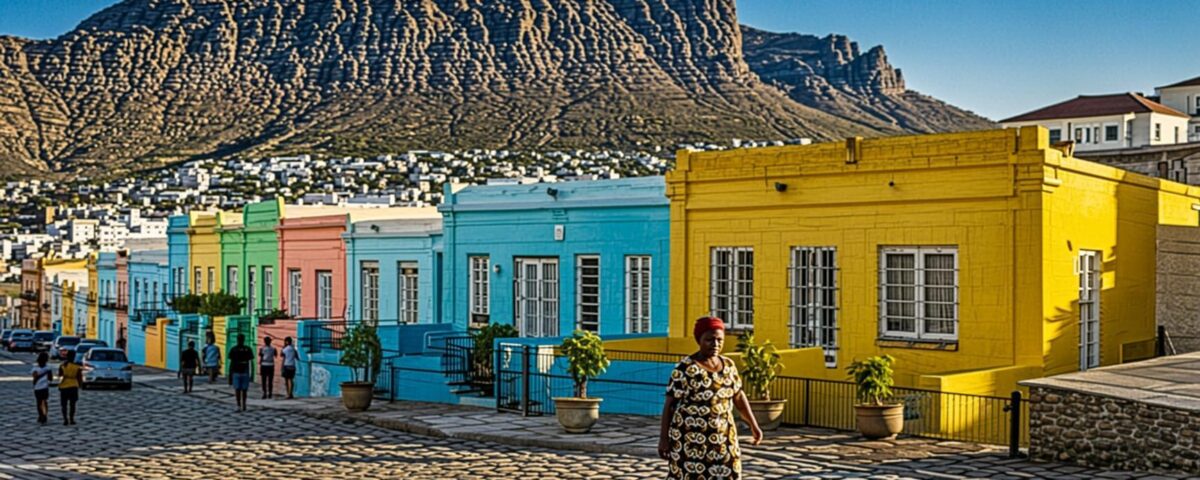
Nestled at the foot of Signal Hill, the Bo-Kaap is one of Cape Town’s most photographed neighborhoods, famous for its brightly colored houses and cobblestone streets. But it is not just a pretty face; it is the historical center of Cape Malay culture. The descendants of enslaved people brought from Southeast Asia, India, and East Africa by the Dutch in the 16th and 17th centuries settled here. The Bo-Kaap Museum and the local spice shops offer a deep dive into this unique Islamic heritage and cuisine.
District Six Museum
District Six was a vibrant, multiracial inner-city neighborhood until the apartheid government declared it a “whites-only” area in 1966. Over 60,000 residents were forcibly removed, and their homes were bulldozed. The museum chronicles this tragic destruction and stands as a memorial to the resilience of the displaced community.
KwaZulu-Natal: Battlefields and Zulu Heritage
The province of KwaZulu-Natal is the heartbeat of the proud Zulu nation and the site of historic military clashes.
The Battlefields Route
History buffs will be captivated by the KwaZulu-Natal battlefields. This region saw major conflicts, including the Anglo-Zulu War (most notably the Battle of Isandlwana, where Zulu warriors defeated the British Empire) and the Anglo-Boer War. Guided tours bring these dramatic, blood-soaked landscapes to life.
Zulu Cultural Villages
To experience the living culture of South Africa’s largest ethnic group, visit a traditional Zulu cultural village (such as Shakaland or DumaZulu). Here, you can witness traditional Zulu dancing, beer brewing, beadwork, and the distinct architecture of Zulu homesteads, gaining a deep appreciation for their customs and social structures.
The Cradle of Humankind (Gauteng/Mpumalanga)
A UNESCO World Heritage Site located about an hour from Johannesburg, the Cradle of Humankind is one of the world’s most important paleoanthropological sites. The Sterkfontein Caves within this area have yielded some of the oldest hominid fossils ever discovered, including the famous “Mrs. Ples” and “Little Foot,” offering a window into our species’ origins millions of years ago.
The Venda People (Limpopo)
For a truly off-the-beaten-path cultural experience, head to the northern Limpopo province, home to the Venda people. Steeped in mysticism and tradition, the Venda are known for their incredible woodcarvings, unique pottery, and the sacred Lake Fundudzi, which is guarded by a mythical python god. The thatched huts and holy forests of this region offer a spiritual contrast to the urban centers of the south.
Exploring South Africa’s historical and cultural sites is a journey through time. It is a reminder of the depths of human cruelty, but more importantly, a testament to the incredible power of resilience, forgiveness, and unity.